Office: A201-G
Email: alisons@nipissingu.ca
Phone: + 1 (705) 474 3450 x 4561
Education:
BHK, University of Windsor;
MHK, University of Windsor;
PhD, York University
Area of specialization:
Biomechanics, with focus on aging/clinical populations.
Current research:
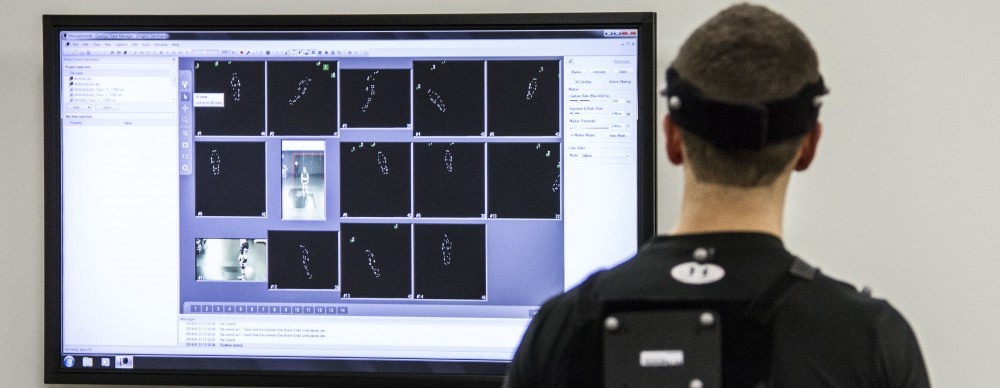
Our Canadian population is aging, and identifying ways to better support older adults in maintaining functional mobility, independence, and quality of life is becoming increasingly important. Biomechanical changes in the performance of everyday, functional tasks (such as walking, lifting, and standing up from a chair) that occur as a result of aging have been well-established. However, less attention has been given to the relationships between different types of biomechanical signals, and how these relationships change with age. In my lab, we use an integrated approach incorporating motion capture, force plates, and/or electromyography to investigate relationships between different biomechanical aspects of movement (such as postural stability, joint movement and coordination, and spatiotemporal parameters), and changes in these relationships across adulthood, with a focus on older adulthood. Upcoming work will seek to start linking these relationships to functional outcomes in older adults, such as impaired mobility and falls.
Current projects:
J. Green: Relationships between kinematic variability and performance metrics during obstacle crossing in older adults (Master’s thesis).
G. O’Neill: Investigating associations between postural stability and functional mobility in older adults (Master’s thesis).
T. Schell: Perturbed gait in stroke: How are relationships between postural stability and spatiotemporal parameters affected? (Undergraduate thesis).
G. Sirbu: Examining relationships between spatiotemporal and kinematic parameters in Parkinsonism (Undergraduate thesis).
R. Targosz: Changes in relationships between postural stability and spatiotemporal measures in healthy aging (Research assistantship).
M. Travers: Spatiotemporal-kinematic relationships during typical and dysfunctional overground gait (Research assistantship).
Current funding:
Towards an improved understanding of aging: Quantifying changes in movement during healthy aging using an integrated biomechanical approach (2020 – 2027). Discovery Grant, Natural Sciences and Engineering Research Council of Canada.
Select recent publications:
URL: https://www.sciencedirect.com/science/article/pii/S0167945724000204.
URL: https://www.sciencedirect.com/science/article/abs/pii/S0966636223000619.
URL: https://www.sciencedirect.com/science/article/abs/pii/S0966636219303030.
Publications:
Please access an up-to-date list of Dr. Schinkel-Ivy’s publications by clicking below:
Google Scholar Citations:
 ResearchGate: